


AI and K–12 Schools: What BYU McKay Students Should Know
- Student Ambassadors

- May 26
- 4 min read

Alea Budge
McKay School Marketing Assistant
Public Relations
Why is this important for Education Majors?

Whether we like it or not, artificial intelligence is reshaping classroom environments across the country. In the scriptures, 2 Nephi 25:23, it specifically counsels us to be constant learners. “...for we know that it is by grace that we are saved, after all we can do.” The phrase "After all we can do" in my mind is guidance from God to do everything in our power to be continuous scholars. In a world constantly evolving a big concern for teachers right AI in schools. The scriptures invite us to always be prepared to learn. Let's learn about how AI has changed the structure of education in schools. Here are a few points below that kick-start the research you can do on your own in your respective McKay School majors.
Benefits & Challenges
AI can significantly improve teaching efficiency by automating time-consuming tasks such as grading, creating differentiated worksheets, generating lesson plan templates, and providing instant feedback on assignments. Teachers work about 50 hours a week, spending less than half the time in direct interaction with students. For teachers with shorter planning periods, AI tools can quickly generate formative assessments, create personalized learning materials for different skill levels, automate parent communication, and provide real-time analysis of student progress data.
According to a survey issued by the Office of Educational Technology to Canada, Singapore, the UK, and the U.S., the time recovered through AI-enabled technology should be redirected toward increased student focus, such as one-on-one tutoring and personalized instruction, ultimately allowing teachers to spend more quality time directly supporting individual student needs (Office of Educational Technology, 27).


If you feel you may not benefit from AI-assisted planning, it can still benefit you in being a more valuable teacher for your students. Jennifer Cook, a professor who teaches 4th-grade students in Newark, N.J., said she loves using Khanmigo's AI feature from Khan Academy. She said, "I don't have to keep stopping to answer all their questions. I can just focus on those six kids that I'm working with" (Education Week, 2025). AI will enhance young students' education if we are willing to work with it and not against it.
However, some major challenges can arise when students use AI lazily, which diminishes their learning and critical thinking skills. This challenge is especially prevalent in young learners. In 2024, the number of students who relied on ChatGPT doubled since 2023 (Sidoti, 2023).
Additionally, a 2025 Pew Research survey of U.S. teens ages 13-17 revealed that around 26% had used ChatGPT for schoolwork - roughly double the rate from just two years prior.
In the July 29, 2025, LDS devotional, Elder Gong counseled us that “Artificial intelligence is not God and cannot be God. “We can consciously choose and intentionally use AI as a tool for good [and] ... we can invite leaders and citizens across industry, research, civic and government bodies, and faith leaders to align rapid AI developments and enduring faith-based principles and moral values.”

It is essential for teachers to be assisted by AI to enhance their thinking and not rely on to do their thinking. As these powerful AI tools continue to grow in K-12 classrooms, further study of their effects on younger students will be crucial to guide effective integration into schools and ensure the preservation of core critical thinking abilities. McKay School students! You, as future teachers, play a key role in helping these young students have a fighting chance in this increasingly growing AI generation. To avoid falling victim to becoming brain-numbed, teachers have the responsibility to teach them healthy habits, so AI expands and doesn't hinder these young minds.
What Teachers Should Do Today
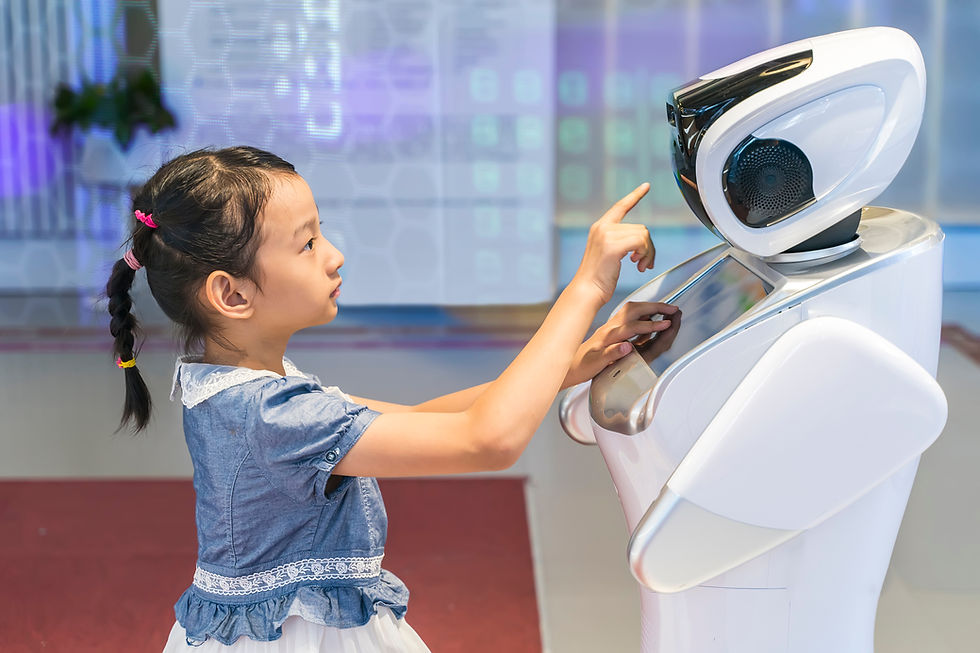
Several school districts have already implemented comprehensive AI training programs. There are mandatory AI Foundations & Ethics meetings annually for all staff. These meetings generally cover what generative AI is, its strengths/limitations, biases, and basic academic integrity. In the classroom, teachers are trained on how to redesign assignments for the max amount of retention. Whether that be to enhance their lesson plans creatively or to create more thought-provoking content.
The ways that these educational meetings have impacted young students is incredible. Children who are dyslexic or have visual impairments can access grade-level text while learning decoding and comprehension strategies with the help of AI tools. AI-powered tools have helped nonverbal students communicate more independently with faster phrase prediction and symbol lookup. Adaptive practice systems provide step-by-step feedback in math and reading, acting as personalized tutors for students who need additional support. Virtual role-play

simulations have helped students practice social communication skills in a low-risk environment.
BE INFORMED! Be ready to support your young students as they navigate this evolving world. 1 out of 10 K-12 professors rate their A.I integration skills as "good" or "excellent"(Education Week, 2025). Be that teacher who is prepared!
If you have any questions about a major in the McKay School do not hesitate to meet with a student ambassador! Click here to schedule an appointment.


Comments